The Alterations Lady Sees Everything: Confessions From the Back Rooms of American Style
There's a woman in a strip mall in Westfield, New Jersey, who knows more about your wardrobe than your best friend does. She's pinned the waistband of your favorite trousers. She's seen the thin spots in the crotch of the jeans you swore were 'premium denim.' She has opinions — strong ones — and unlike your favorite style influencer, she doesn't get a commission when you buy something.
We spent three weeks talking to the people who keep American closets standing: a third-generation tailor in Chicago, a shoe repair tech in Portland, a dry cleaner outside Atlanta, and the alterations lady herself, Marta, who has run her shop off Elm Street for twenty-six years. What they told us amounts to the most honest style critique you'll read all year. No affiliate links. No brand partnerships. Just people who touch fabric for a living and have quietly watched two decades of fashion decisions walk through their doors.
The Fast Fashion Autopsy
Ask any of them about fast fashion and watch their faces. It's not snobbery — it's exhaustion.
"People bring me a $25 blazer and ask me to take it in, and I have to tell them the truth," Marta says, gesturing at a pile of fused seams on her worktable. "The seam allowance is this thin." She holds up two fingers, barely a centimeter apart. "There is nothing to let out, nothing to let in. The garment was born with no room to grow. You can't fix what was never built."
Derek Okafor, the tailor behind Okafor & Sons on Chicago's South Side, puts it more bluntly: "Cheap clothes aren't cheaper. They're just cheaper the first time."
His shop re-hems the same pants over and over, reattaches the same buttons, re-stitches the same bag linings. The math, he says, stopped making sense around 2015. "A good pair of trousers used to come in for one alteration and stay altered. Now the same customer brings the same style back four times a year because the fabric pills, the knees blow out. That's not a wardrobe. That's a rental."
The Fabrics They'd Never Touch
Every person we interviewed had a short list of materials they'd refuse at the door if they could.
Polyester blends with a high sheen. "You cannot press them without melting them," says Rosa, who runs the counter at a dry cleaner outside Marietta, Georgia. "And they hold odor in a way cotton never does. People wonder why their clothes smell after one wear. I wonder why they bought fabric that can't breathe."
Bonded leather. Portland shoe repair tech Sam Ishikawa doesn't mince words: "Real leather can be resoled, conditioned, stitched. Bonded leather is basically fabric with a leather-flavored coating. When it cracks — and it will crack — there's nothing underneath to save. People bring me boots that are unsalvageable and they're shocked. I'm not. I saw the label."
Anything with glued construction. "Stitching is a promise," Ishikawa adds. "Glue is a countdown."
Delicate 'dry clean only' knits that aren't. Rosa pulls a sweater from a rack — a famous mall brand, $98 retail. "This says dry clean only. It's cotton. It's cotton with a markup. Somebody decided a care label was a branding exercise."
What Actually Holds Up
Here's the part nobody with a discount code wants you to hear: the pieces these professionals see come back looking great are rarely the trend pieces.
- Natural fiber suiting — wool, linen, cotton twill. "Wool forgives," says Okafor. "It can be pressed, re-shaped, re-woven. It's the only fabric I'd call alive."
- Full-grain leather footwear with stitched soles. Ishikawa resoles Goodyear-welted boots that have outlived three owners.
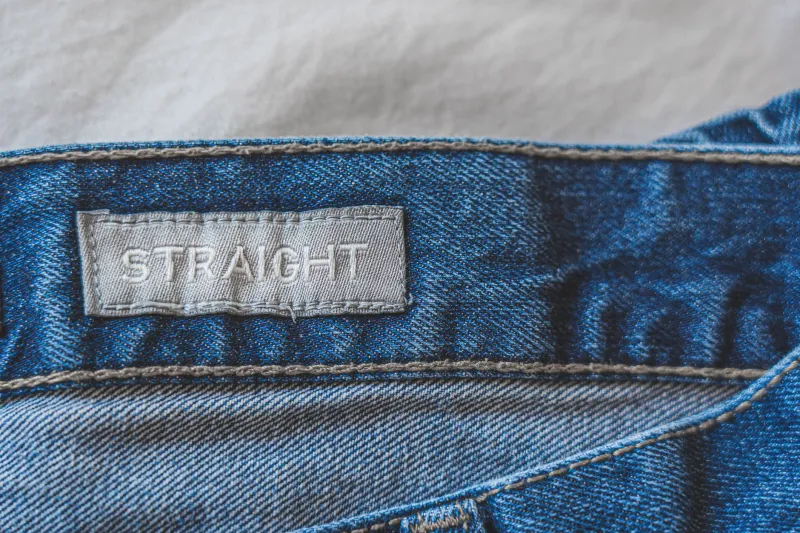
- Heavyweight denim with chain-stitched hems — the kind that fades instead of fraying.
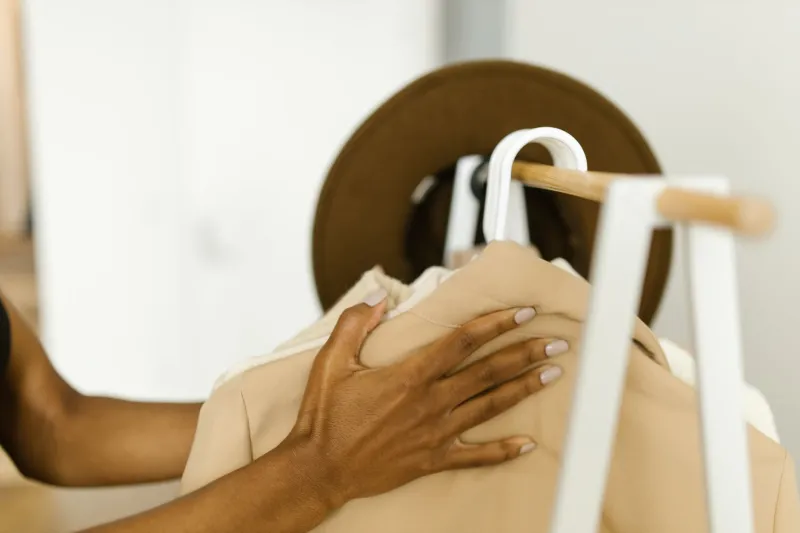
- Coats with real seam allowances. Marta can take in or let out a well-made coat by two full sizes over its lifetime. "A good coat is a house you can renovate."
The pattern is clear, and it's boring on purpose: buy fewer things, made of actual materials, constructed in ways that assume repair. Every craftsperson we spoke to said some version of the same sentence: buy it once, bring it to me twice, keep it for fifteen years.
The Body Truth Nobody Posts
The most tender part of these conversations wasn't about fabric at all. It was about bodies.
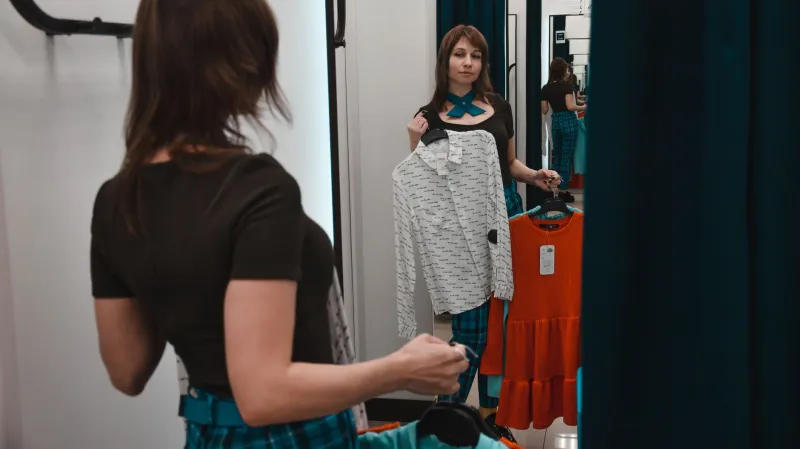
"People apologize when they come in," Marta says. "They walk in already saying sorry — for their arms, their stomach, their height. I tell them: the clothes are wrong, not you. Off-the-rack is made for nobody. It's made for an average that doesn't exist."
She's watched generations of customers go from dreading the fitting mirror to requesting it. "Once they see what a $40 alteration does to a $60 dress, they stop chasing sizes and start chasing fit. That's when getting dressed gets fun. That's when they come back smiling."
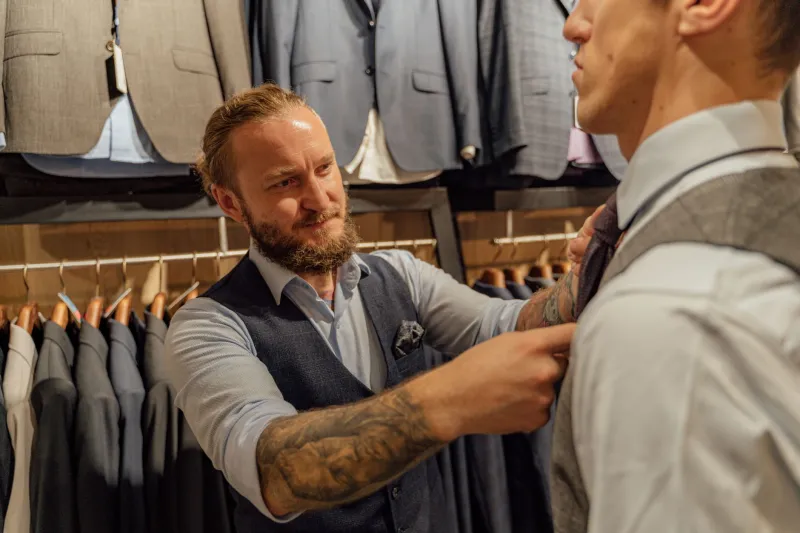
Okafor agrees. "The most stylish clients I have aren't the richest. They're the ones who got one good suit fitted properly and wear it like it was poured on them. Fit is the whole trick. Everything else is marketing."
Take It From the Back Room
If there's one through-line from every shop we visited, it's this: the people who service clothes have no incentive to lie to you. They don't care what's trending. They care what lasts.
So the next time you're deciding between the viral dupe and the boring, well-made version — or wondering whether that too-good-to-be-true price tag is a steal — think of the alterations lady with her pins and her two-centimeter seam allowances. She already knows how this story ends.
And honestly? She'd love to see you less often — for the right reasons.