Your 'Investment Piece' Has a Subscription Fee (Nobody Told You)
Somewhere along the way, the fashion industry convinced us that buying expensive things was the same as buying smart things. "Investment piece" became the magic incantation—we recited it over leather totes, wool coats, and $900 boots, and felt financially responsible instead of merely broke.
Here's the part the influencer skipped: an investment pays you. Your coat charges you. Forever. Welcome to the real cost of ownership, where the price tag is just the down payment.
The Bill Arrives After the Honeymoon
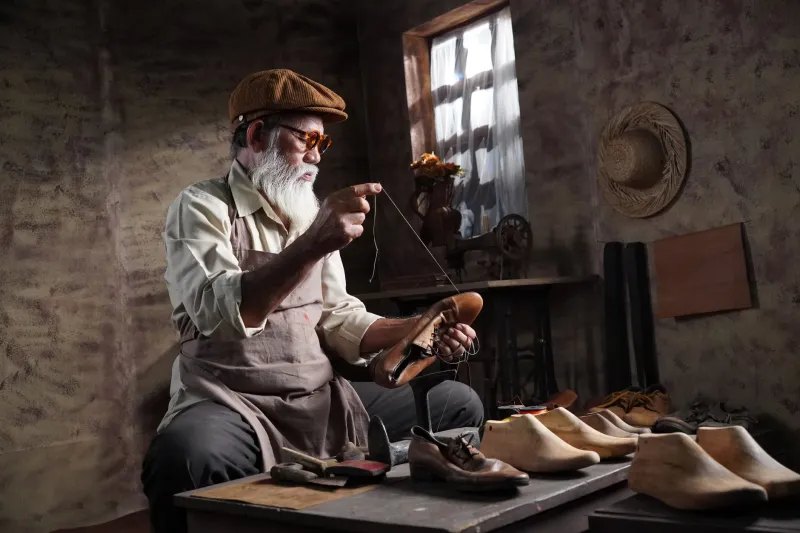
Let's talk numbers. A quality wool coat needs professional cleaning once, maybe twice, a season—call it $60 to $90 a pop in most US cities. A structured designer handbag should be conditioned annually ($50 to $150, depending on how fancy your cobbler is). Leather-soled shoes require sole guards, heel taps, and eventual resoles, which can run $75 to $125 per pair, per cycle. Suede? That's a protectant spray, a special brush, and a standing appointment with regret every time it rains.
Add it up over a decade and a single "investment" capsule can quietly accrue thousands in maintenance costs. Nobody screenshots that for the haul video.
I spoke with Rachel, a former luxury reseller in New York who now works with private clients, and she's blunt about it. "People treat condition as a given. It's not. Condition is a subscription. Stop paying and the value evaporates—and unlike a stock, your bag can't be diversified. It can just be moldy."
The Collectors Who Do the Math
The people who actually profit from resale aren't the ones with the most stuff. They're the ones with the spreadsheet. Marcus, a sneaker and streetwear reseller in Atlanta, showed me his tracking system: purchase price, cleaning costs, storage supplies, resell prep fees, even the silica gel packets. "The guys who lose money are the ones who buy and forget. The ones who win treat every piece like it's on life support and they're paying the hospital bill."
Storage is its own silent line item. Climate control matters—attics and basements kill leather and warp silk. Garment bags, cedar, padded hangers, dust covers. One collector in Los Angeles estimated she spends roughly $400 a year just on preservation supplies. Her collection looks immaculate. So does her Costco receipt for acid-free tissue paper.
The Garment Care Economist Weighs In
Dr. Elena Voss, who studies the economics of clothing longevity, frames it simply: "We price fashion at acquisition and ignore the total cost of custody. A garment's lifespan is a function of care spending. The question isn't 'can I afford this coat?' It's 'can I afford this coat's lifestyle?'"
Her advice for the rest of us? Match the maintenance to the meaning. "Care spending should track wear frequency. A coat you wear weekly justifies the cobbler. A gown you wear once is a rental you already bought."
So Is It Worth It?
Honestly? Sometimes. A well-made piece, maintained properly, can outlast trends, resell decently, or simply serve you for twenty years—which, in a fast-fashion economy, is its own radical act. The cost-per-wear math can genuinely work.
But let's retire the lie. An investment piece isn't an investment. It's a relationship. And relationships, as any honest person will tell you, cost money after the wedding. Budget for the cobbler. Budget for the cleaner. Budget for the silica gel packets.
Or, alternative strategy: buy the good coat, wear it into the ground, and let the patina tell the story. Some of us prefer our assets fully depreciated and deeply loved.