The Tape Measure Doesn't Flatter: What Tailors Write Down When You're Not Looking
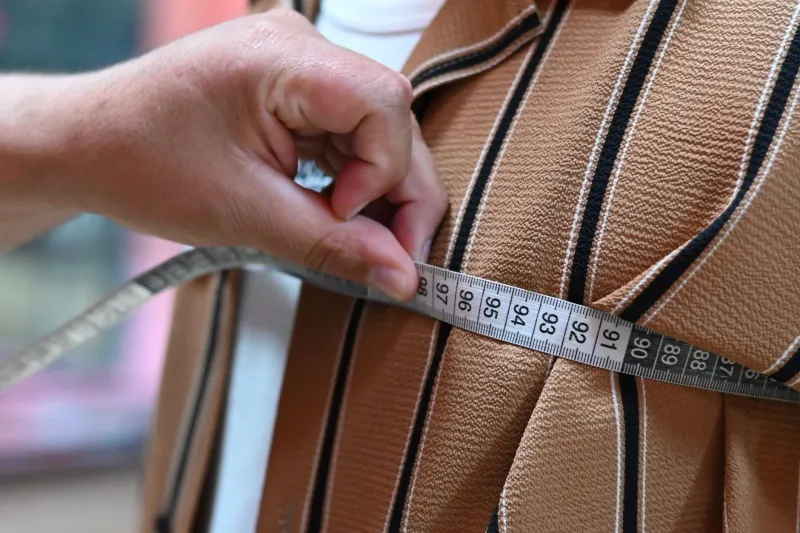
There's a slip of paper behind the counter at nearly every tailor shop in America, and it knows more about you than your therapist does. On it: your actual inseam. Your true waist, measured standing still, exhaling, no camera angles involved. The number you'd rather not say out loud at brunch.
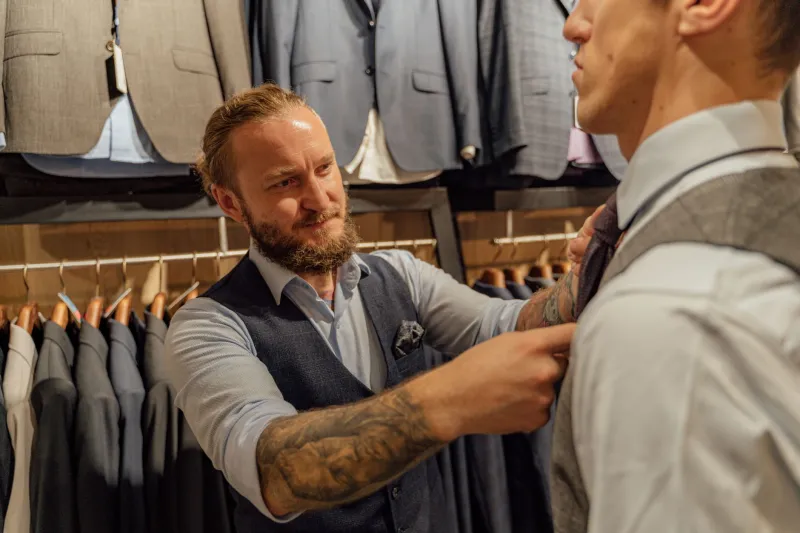
The people who run those slips of paper — the alteration techs, the dry cleaner counter staff, the woman who's been pinning hems in the same strip mall since the '90s — occupy a strange position in fashion. They are the only professionals who regularly see what Americans actually look like in their clothes, unfiltered by the fitting room mirror and the flattering overhead lighting we've all learned to trust.
And what they see, they say, rarely matches what we claim.
The Vanity Math Problem
"I stopped asking people their size years ago," says Marta, an alteration specialist outside Chicago who asked us to use only her first name. "Because they tell me the size they wish they were. Then I measure, and the garment tells me the truth."
Her clients aren't lying on purpose, she's quick to add. They're just repeating numbers back to themselves that the industry gave them. A 'medium' at one retailer runs like a small at another. A 'size 10' from 1995 isn't a size 10 today. Vanity sizing — the slow, quiet inflation of size labels over decades — means most of us have a number in our head that was negotiated sometime around high school and never updated.
The tape measure doesn't participate in that negotiation.
What the Tickets Actually Say
Ask around the garment care world and a pattern emerges. The most common alteration in America isn't a dramatic resize — it's a hem. But the reason for the hem is the tell. Pants bought online, in the size we've always "been," that then need two inches taken in at the waist. Blazers that fit in the shoulders but gap at the bust. Jeans that work everywhere except the thigh.
"Nobody is shaped like the size chart," says Devon, who manages a dry cleaner in suburban Atlanta. "The chart assumes one body. My ticket book has ten thousand different bodies in it."
That ticket book, in a sense, is the most honest dataset in fashion. It's a record of how clothes actually meet actually American bodies — bodies that are taller, shorter, curvier, broader, and more varied than any single sizing grid can hold.
Why This Matters for Your Wardrobe
Here's the practical takeaway, and it's not "get measured and weep." It's this: the number on the tag was never the point. The fit is the point.
Professionals suggest a few things the alteration ticket already knows:
- Buy for the largest measurement, alter the rest. Shoulders and bust are hard to fix. Waists and hems are cheap and easy.
- Learn two numbers, not one. Your true waist and your inseam will save you more online shopping returns than any review section.
- Budget for the tailor like you budget for the outfit. A $20 alteration on a $60 pair of pants beats a $120 pair that never quite sat right.
The Professionals Aren't Judging You
The fear that keeps people out of the tailor's shop is the fear of being seen — precisely, in inches, by a stranger. But every tailor we spoke to described the opposite experience: clients who come in braced for judgment and leave wondering why they waited so long.
"The tape doesn't have opinions," Marta laughs. "I've measured thousands of people. I remember the clothes, not the numbers."
There's something almost radical in that. In a culture that treats size as identity — a number to defend, negotiate, or shrink — the garment care industry treats it as what it actually is: a measurement. A starting point. Information.
The dry cleaner doesn't know your size lies. Honestly? They never believed them in the first place. And that might be the most freeing thing about walking through their door: for once, nobody's asking you to perform a number. Just stand still, breathe out, and let the tape do its quiet, honest work.